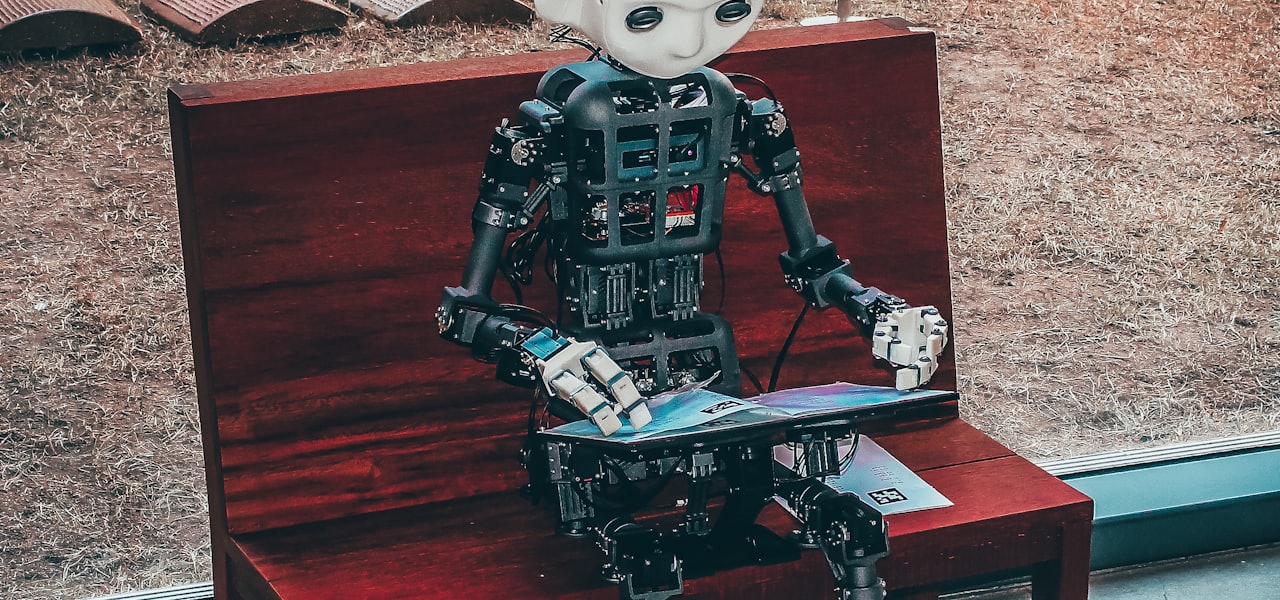
Trying to pick the best AI subtitle generator? An AI subtitle generator is software that uses machine learning to help you get more done — it scales effortlessly from a single task to thousands. The best picks balance beginner-friendly simplicity with the depth power users need, and they ship updates often. Whether you are a beginner or a pro, the right AI subtitle generator slots into your workflow and pays for itself fast. Read on for hands-on impressions, pricing tiers, and the standout features that matter.
Texture compression
Texture compression is a specialized form of image compression designed for storing texture maps in 3D computer graphics rendering systems. Unlike conventional image compression algorithms, texture compression algorithms are optimized for random access. Texture compression can be applied to reduce memory usage at runtime. Texture data is often the largest source of memory usage in a mobile application. == Tradeoffs == In their seminal paper on texture compression, Beers, Agrawala and Chaddha list four features that tend to differentiate texture compression from other image compression techniques. These features are: Decoding Speed It is highly desirable to be able to render directly from the compressed texture data and so, in order not to impact rendering performance, decompression must be fast. Random Access Since predicting the order that a renderer accesses texels would be difficult, any texture compression scheme must allow fast random access to decompressed texture data. This tends to rule out many better-known image compression schemes such as JPEG or run-length encoding. Compression Rate and Visual Quality In a rendering system, lossy compression can be more tolerable than for other use cases. Some texture compression libraries, such as crunch, allow the developer to flexibly trade off compression rate vs. visual quality, using methods such as rate–distortion optimization (RDO). Encoding Speed Texture compression is more tolerant of asymmetric encoding/decoding rates as the encoding process is often done only once during the application authoring process. Given the above, most texture compression algorithms involve some form of fixed-rate lossy vector quantization of small fixed-size blocks of pixels into small fixed-size blocks of coding bits, sometimes with additional extra pre-processing and post-processing steps. Block Truncation Coding is a very simple example of this family of algorithms. Because their data access patterns are well-defined, texture decompression may be executed on-the-fly during rendering as part of the overall graphics pipeline, reducing overall bandwidth and storage needs throughout the graphics system. As well as texture maps, texture compression may also be used to encode other kinds of rendering map, including bump maps and surface normal maps. Texture compression may also be used together with other forms of map processing such as mipmaps and anisotropic filtering. == Availability == Some examples of practical texture compression systems are S3 Texture Compression (S3TC), PVRTC, Ericsson Texture Compression (ETC) and Adaptive Scalable Texture Compression (ASTC); these may be supported by special function units in modern graphics processing units (GPUs). OpenGL and OpenGL ES, as implemented on many video accelerator cards and mobile GPUs, can support multiple common kinds of texture compression - generally through the use of vendor extensions. == Supercompression == A compressed-texture can be further compressed in what is called "supercompression". Fixed-rate texture compression formats are optimized for random access and are much less efficient compared to image formats such as PNG. By adding further compression, a programmer can reduce the efficiency gap. The extra layer can be decompressed by the CPU so that the GPU receives a normal compressed texture, or in newer methods, decompressed by the GPU itself. Supercompression saves the same amount of VRAM as regular texture compression, but saves more disk space and download size. == Neural Texture Compression == Random-Access Neural Compression of Material Textures (Neural Texture Compression) is a Nvidia's technology which enables two additional levels of detail (16× more texels, so four times higher resolution) while maintaining similar storage requirements as traditional texture compression methods. The key idea is compressing multiple material textures and their mipmap chains together, and using a small neural network, that is optimized for each material, to decompress them.
Linux color management
Linux color management has the same goal as the color management systems (CMS) for other operating systems, which is to achieve the best possible color reproduction throughout an imaging workflow from its source (camera, video, scanner, etc.), through imaging software (Digikam, darktable, RawTherapee, GIMP, Krita, Scribus, etc.), and finally onto an output medium (monitor, video projector, printer, etc.). In particular, color management attempts to enable color consistency across media and throughout a color-managed workflow. Linux color management relies on the use of accurate ICC (International Color Consortium) and DCP (DNG Color Profile) profiles describing the behavior of input and output devices, and color-managed applications that are aware of these profiles. These applications perform gamut conversions between device profiles and color spaces. Gamut conversions, based on accurate device profiles, are the essence of color management. Historically, color management was not an initial design consideration of the X Window System on which much of Linux graphics support rests, and thus color-managed workflows have been somewhat more challenging to implement on Linux than on other OS's such as Microsoft Windows or macOS. This situation is now being progressively remedied, and color management under Linux, while functional, has not yet acquired mature status. Although it is now possible to obtain a consistent color-managed workflow under Linux, certain problems still remain: The absence of a central user control panel for color settings. Some hardware devices for color calibration lack Linux drivers, firmware or accessory data. Since ICC color profiles are written to an open specification, they are compatible across operating systems. Hence, a profile produced on one OS should work on any other OS given the availability of the necessary software to read it and perform the gamut conversions. This can be used as a workaround for the lack of support for certain spectrophotometers or colorimeters under Linux: one can simply produce a profile on a different OS and then use it in a Linux workflow. Additionally, certain hardware, such as most printers and certain monitors, can be calibrated under another OS and then used in a fully color-managed workflow on Linux. The popular Ubuntu Linux distribution added initial color management in the 11.10 release (the "Oneiric Ocelot" release). == Requirements for a color-managed workflow == Accurate device profiles obtained with source or output characterization software. Correctly loaded video card lookup tables (LUTs) (or monitor profiles that do not require LUT adjustments). Color-managed applications that are configured to use a correct monitor profile and input/output profiles, with support for control over the rendering intent and black point compensation. Calibration and profiling requires: for input devices (scanner, camera, etc.) a color target which the profiling software will compare to the manufacturer-provided color values of the target. or for output devices (monitor, printer, etc.) a reading with a specific device (spectrophotometer, colorimeter or spectrocolorimeter) of the color patch values and comparing the measured values against the values originally sent for output. === Monitor calibration and profiling === One of the critical elements in any color-managed workflow is the monitor, because, at one step or another, handling and making color adaptation through imaging software is required for most images, thus the ability of the monitor to present accurate colors is crucial. Monitor color management consists of calibration and profiling. The first step, calibration, is done by adjusting the monitor controls and the output of the graphics card (via calibration curves) to match user-definable characteristics, such as brightness, white point and gamma. The calibration settings are stored in a .cal file. The second step, profiling (characterization), involves measuring the calibrated display's response and recording it in a color profile. The profile is stored in an .icc file ("ICC file"). For convenience, the calibration settings are usually stored together with the profile in the ICC file. Note that .icm files are identical to .icc files - the difference is only in the name. Seeing correct colors requires using a monitor profile-aware application, together with the same calibration used when profiling the monitor. Calibration alone does not yield accurate colors. If a monitor was calibrated before it was profiled, the profile will only yield correct colors when used on the monitor with the same calibration (the same monitor control adjustments and the same calibration curves loaded into the video card's lookup table). macOS has built-in support for loading calibration curves and installing a system-wide color profile. Windows 7 onward allows loading calibration curves, though this functionality must be enabled manually. Linux and older versions of Windows require using a standalone LUT loader. === Device profiles === ICC profiles are cross-platform and can thus be created on other operating systems and used under Linux. Monitor profiles, however, require some additional attention. Since a monitor profile depends both on the monitor itself and on the video card, a monitor profile should only be used with the same monitor and video card with which it was created. The monitor settings should not be adjusted after creating the profile. In addition, since most calibration software use LUT adjustments during calibration, the corresponding LUTs must be loaded every time the display server (X11, Wayland) is started (e.g. with every graphical login). In the unlikely case of a colorimeter being unsupported by Linux, a profile created under Windows or macOS can be used under Linux. === Display-channel lookup tables === There are two approaches to loading display channel LUTs: Create a profile that does not modify video card LUTs and thus does not require LUTs be loaded later on. Ideally, this approach would rely on DDC-capable monitors—the internal monitor settings of which are set via calibration software. Unfortunately, monitors capable of making these adjustments through DDC are not common and are generally expensive. There is only one calibration software on Linux that can interact with a DDC monitor. For mainstream monitors, a couple of options exist: BasICColor software, which works with most colorimeters on the market, allows one to adjust display output via the monitor interface, and then to choose a "Profile, do not calibrate" option. By doing this, one can create a profile that does not require video card LUT adjustments. For EyeOne devices, EyeOne Match allows the user to calibrate to "Native" gamma and white point targets, which results in the LUT adjustment curves displayed after the calibration as a simple, linear 1:1 mapping (a straight line from corner to corner). Both BasICColor and EyeOne Match do not presently run under Linux but they are capable of creating a profile that does not require LUT adjustments. Use an LUT loader to actually load the LUT adjustments contained within the profile prepared during calibration. According to the documentation, these loaders do not modify the video card LUT by itself, but achieve the same type of adjustment by modifying the X server gamma ramp. Loaders are available for Linux distributions that use X.org or XFree86—the two most popular X servers on Linux. Other X servers are not guaranteed to work with the currently available loaders. There are two LUT loaders available for Linux: Xcalib is one such loader, and although it is a command-line utility, it is quite easy to use. dispwin is a part of Argyll CMS. If, for any reason, the LUT cannot be loaded, it is still recommended to go through the initial stages of calibration where a user is asked by calibration software to make some manual adjustments to the monitor, as this will often improve display linearity and also provide information on its color temperature. This is especially recommended for CRT monitors. === Color-managed applications === In ICC-aware applications, it is important to make sure the correct profiles are assigned to devices, mainly to the monitor and the printer. Some Linux applications can auto-detect the monitor profile, while others requires that it is specified manually. Although there is no designated place to store device profiles on Linux, /usr/share/color/icc/ has become the de facto standard. Most applications running under WINE have not been fully tested for color accuracy. While 8-bpp programs can have some color resolution difficulties due to depth conversion errors, colors in higher-depth applications should be accurate, as long as those programs perform their gamut conversions based on the same monitor profile as that used for loading the LUT, granted that the corresponding LUT adjustments are loaded. == List of color-managed applications == darktabl
Graphical Kernel System
The Graphical Kernel System (GKS) is a 2D computer graphics system using vector graphics, introduced in 1977. It was suitable for making line and bar charts and similar tasks. A key concept was cross-system portability, based on an underlying coordinate system that could be represented on almost any hardware. GKS is best known as the basis for the graphics in the GEM GUI system used on the Atari ST and as part of Ventura Publisher. A draft international standard was circulated for review in September 1983. Final ratification of the standard was achieved in 1985, making it the first ISO graphics standard. A 3D system modelled on GKS was introduced as PHIGS, which saw some use in the 1980s and early 1990s. == Overview == GKS provides a set of drawing features for two-dimensional vector graphics suitable for charting and similar duties. The calls are designed to be portable across different programming languages, graphics devices and hardware, so that applications written to use GKS will be readily portable to many platforms and devices. GKS was fairly common on computer workstations in the 1980s and early 1990s. GKS formed the basis of Digital Research's GSX which evolved into VDI, one of the core components of GEM. GEM was the native GUI on the Atari ST and was occasionally seen on PCs, particularly in conjunction with Ventura Publisher. GKS was little used commercially outside these markets, but remains in use in some scientific visualization packages. It is also the underlying API defining the Computer Graphics Metafile. One popular application based on an implementation of GKS is the GR Framework, a C library for high-performance scientific visualization that has become a common plotting backend among Julia users. A main developer and promoter of the GKS was José Luis Encarnação, formerly director of the Fraunhofer Institute for Computer Graphics (IGD) in Darmstadt, Germany. GKS has been standardized in the following documents: ANSI standard ANSI X3.124 of 1985. ISO 7942:1985 standard, revised as ISO 7942:1985/Amd 1:1991 and ISO/IEC 7942-1:1994, as well as ISO/IEC 7942-2:1997, ISO/IEC 7942-3:1999 and ISO/IEC 7942-4:1998 The language bindings are ISO standard ISO 8651. GKS-3D (Graphical Kernel System for Three Dimensions) functional definition is ISO standard ISO 8805, and the corresponding C bindings are ISO/IEC 8806. The functionality of GKS is wrapped up as a data model standard in the STEP standard, section ISO 10303-46.
New York Institute of Technology Computer Graphics Lab
The New York Institute of Technology Computer Graphics Lab is a computer lab located at the New York Institute of Technology (NYIT), founded by Alexander Schure. It was originally located at the "pink building" on the NYIT campus. It has played an important role in the history of computer graphics and animation, as founders of Pixar and Lucasfilm Limited, including Turing Award winners Edwin Catmull and Patrick Hanrahan, began their research there. It is the birthplace of entirely 3D CGI films. The lab was initially founded to produce a short high-quality feature film with the project name of The Works. The feature, which was never completed, was a 90-minute feature that was to be the first entirely computer-generated CGI movie. Production mainly focused around DEC PDP and VAX machines. Many of the original CGL team now form the elite of the CG and computer world with members going on to Silicon Graphics, Microsoft, Cisco, NVIDIA and others, including Pixar president, co-founder and Turing laureate Ed Catmull, Pixar co-founder and Microsoft graphics fellow Alvy Ray Smith, Pixar co-founder Ralph Guggenheim, Walt Disney Animation Studios chief scientist Lance Williams, Netscape and Silicon Graphics founder Jim Clark, Tableau co-founder and Turing laureate Pat Hanrahan, Microsoft graphics fellow Jim Blinn, Thad Beier, Oscar and Bafta nominee Jacques Stroweis, Andrew Glassner, and Tom Brigham. Systems programmer Bruce Perens went on to co-found the Open Source Initiative. Researchers at the New York Institute of Technology Computer Graphics Lab created the tools that made entirely 3D CGI films possible. Among NYIT CG Lab's many innovations was an eight-bit paint system to ease computer animation. NYIT CG Lab was regarded as the top computer animation research and development group in the world during the late 70s and early 80s. == The 21st century == The lab is presently located at NYIT's Long Island campus, and NYIT currently offers a Ph.D. program in Computer Science.
Radek Maneuver
The Radek Maneuver is a scale-up-then-scale-down tactic used in the administration of web services, specifically those deployed under a cloud computing paradigm (by a provider e.g. Amazon Elastic Compute Cloud or Microsoft Azure). == History == Developed by Olivier "Radek" Dabrowski in the mid-2010s, the Radek Maneuver was originally conceived of in using and maintaining applications running on a PaaS system. == Execution == The Radek Maneuver consists of a series of steps, usually executed via the PaaS or web portal interface. The tactic should be used when a service is misbehaving or otherwise experiencing errors, and the suspected cause is the underlying cloud layer, rather than the application layer. This includes networking issues and other "bad box" problems. The steps are as follows: Identify the application or service which is misbehaving. Increase the compute resource (number of CPU cores, amount of ram) for the instance on which the application is running. This is also known as scaling up. Wait for the application to re-deploy and stabilize. Scale back down to the original instance size. == Principle of action == This scale-up-scale-down method is understood to shift the application to a different physical machine underlying the PaaS service or application virtual machine. While this layer of the cloud computing stack is generally out of the access of an application developer (instead in the hands of the cloud provider), the maneuver allows troubleshooting and dodging errors in that layer.
IT baseline protection
The IT baseline protection (German: IT-Grundschutz) approach from the German Federal Office for Information Security (BSI) is a methodology to identify and implement computer security measures in an organization. The aim is the achievement of an adequate and appropriate level of security for IT systems. To reach this goal the BSI recommends "well-proven technical, organizational, personnel, and infrastructural safeguards". Organizations and federal agencies show their systematic approach to secure their IT systems (e.g. Information Security Management System) by obtaining an ISO/IEC 27001 Certificate on the basis of IT-Grundschutz. == Overview baseline security == The term baseline security signifies standard security measures for typical IT systems. It is used in various contexts with somewhat different meanings. For example: Microsoft Baseline Security Analyzer: Software tool focused on Microsoft operating system and services security Cisco security baseline: Vendor recommendation focused on network and network device security controls Nortel baseline security: Set of requirements and best practices with a focus on network operators ISO/IEC 13335-3 defines a baseline approach to risk management. This standard has been replaced by ISO/IEC 27005, but the baseline approach was not taken over yet into the 2700x series. There are numerous internal baseline security policies for organizations, The German BSI has a comprehensive baseline security standard, that is compliant with the ISO/IEC 27000-series == BSI IT baseline protection == The foundation of an IT baseline protection concept is initially not a detailed risk analysis. It proceeds from overall hazards. Consequently, sophisticated classification according to damage extent and probability of occurrence is ignored. Three protection needs categories are established. With their help, the protection needs of the object under investigation can be determined. Based on these, appropriate personnel, technical, organizational and infrastructural security measures are selected from the IT Baseline Protection Catalogs. The Federal Office for Security in Information Technology's IT Baseline Protection Catalogs offer a "cookbook recipe" for a normal level of protection. Besides probability of occurrence and potential damage extents, implementation costs are also considered. By using the Baseline Protection Catalogs, costly security analyses requiring expert knowledge are dispensed with, since overall hazards are worked with in the beginning. It is possible for the relative layman to identify measures to be taken and to implement them in cooperation with professionals. The BSI grants a baseline protection certificate as confirmation for the successful implementation of baseline protection. In stages 1 and 2, this is based on self declaration. In stage 3, an independent, BSI-licensed auditor completes an audit. Certification process internationalization has been possible since 2006. ISO/IEC 27001 certification can occur simultaneously with IT baseline protection certification. (The ISO/IEC 27001 standard is the successor of BS 7799-2). This process is based on the new BSI security standards. This process carries a development price which has prevailed for some time. Corporations having themselves certified under the BS 7799-2 standard are obliged to carry out a risk assessment. To make it more comfortable, most deviate from the protection needs analysis pursuant to the IT Baseline Protection Catalogs. The advantage is not only conformity with the strict BSI, but also attainment of BS 7799-2 certification. Beyond this, the BSI offers a few help aids like the policy template and the GSTOOL. One data protection component is available, which was produced in cooperation with the German Federal Commissioner for Data Protection and Freedom of Information and the state data protection authorities and integrated into the IT Baseline Protection Catalog. This component is not considered, however, in the certification process. == Baseline protection process == The following steps are taken pursuant to the baseline protection process during structure analysis and protection needs analysis: The IT network is defined. IT structure analysis is carried out. Protection needs determination is carried out. A baseline security check is carried out. IT baseline protection measures are implemented. Creation occurs in the following steps: IT structure analysis (survey) Assessment of protection needs Selection of actions Running comparison of nominal and actual. === IT structure analysis === An IT network includes the totality of infrastructural, organizational, personnel, and technical components serving the fulfillment of a task in a particular information processing application area. An IT network can thereby encompass the entire IT character of an institution or individual division, which is partitioned by organizational structures as, for example, a departmental network, or as shared IT applications, for example, a personnel information system. It is necessary to analyze and document the information technological structure in question to generate an IT security concept and especially to apply the IT Baseline Protection Catalogs. Due to today's usually heavily networked IT systems, a network topology plan offers a starting point for the analysis. The following aspects must be taken into consideration: The available infrastructure, The organizational and personnel framework for the IT network, Networked and non-networked IT systems employed in the IT network. The communications connections between IT systems and externally, IT applications run within the IT network. === Protection needs determination === The purpose of the protection needs determination is to investigate what protection is sufficient and appropriate for the information and information technology in use. In this connection, the damage to each application and the processed information, which could result from a breach of confidentiality, integrity or availability, is considered. Important in this context is a realistic assessment of the possible follow-on damages. A division into the three protection needs categories "low to medium", "high" and "very high" has proved itself of value. "Public", "internal" and "secret" are often used for confidentiality. === Modelling === Heavily networked IT systems typically characterize information technology in government and business these days. As a rule, therefore, it is advantageous to consider the entire IT system and not just individual systems within the scope of an IT security analysis and concept. To be able to manage this task, it makes sense to logically partition the entire IT system into parts and to separately consider each part or even an IT network. Detailed documentation about its structure is prerequisite for the use of the IT Baseline Protection Catalogs on an IT network. This can be achieved, for example, via the IT structure analysis described above. The IT Baseline Protection Catalogs' components must ultimately be mapped onto the components of the IT network in question in a modelling step. === Baseline security check === The baseline security check is an organisational instrument offering a quick overview of the prevailing IT security level. With the help of interviews, the status quo of an existing IT network (as modelled by IT baseline protection) relative to the number of security measures implemented from the IT Baseline Protection Catalogs are investigated. The result is a catalog in which the implementation status "dispensable", "yes", "partly", or "no" is entered for each relevant measure. By identifying not yet, or only partially, implemented measures, improvement options for the security of the information technology in question are highlighted. The baseline security check gives information about measures, which are still missing (nominal vs. actual comparison). From this follows what remains to be done to achieve baseline protection through security. Not all measures suggested by this baseline check need to be implemented. Peculiarities are to be taken into account! It could be that several more or less unimportant applications are running on a server, which have lesser protection needs. In their totality, however, these applications are to be provided with a higher level of protection. This is called the (cumulation effect). The applications running on a server determine its need for protection. Several IT applications can run on an IT system. When this occurs, the application with the greatest need for protection determines the IT systems protection category. Conversely, it is conceivable that an IT application with great protection needs does not automatically transfer this to the IT system. This may happen because the IT system is configured redundantly, or because only an inconsequential part is running on it. This is called the (distribution effect). This is the case, fo